




|
| Paleoanthropological
survey in the 1970's of the Gona sediments discovered them to contain late Pliocene
archaeological sites. Initially estimated to be ca. 2.5myo, it was not until the
research of Dr. Sileshi Semaw and colleagues provided reliable dates (2.52-2.60mya) for
these materials, thus verifying the Kada Gona D'ar valley as having the earliest evidence
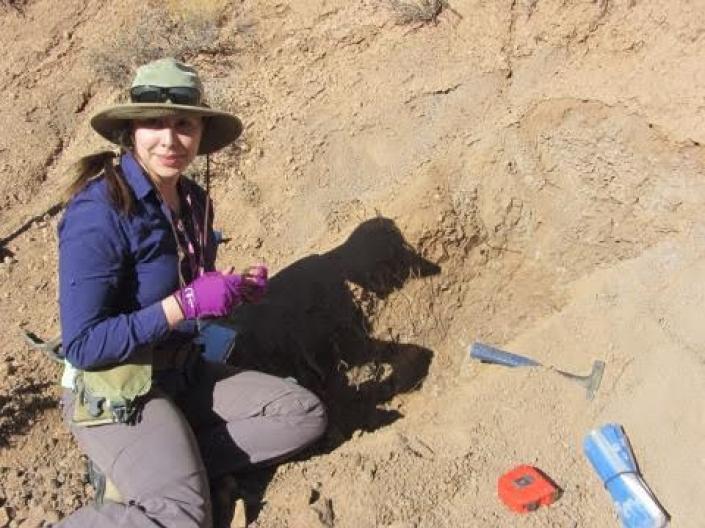
of stone tool manufacture and use. The international, multidisciplinary Gona Paleoanthropological project began field research in earnest in 1999. To date, well over 100 paleontological and archaeological sites have been found ranging in age from latest Miocene to the middle Pleistocene. This period spans the earliest stages of the human lineage from Ardipithecus ramidus through late Homo erectus. This period also recorded the major technological innovations especially the adoption of stone tools as well as the transition to and evolution of the Acheulian stone tool tradition. Overall, these archaeologically and faunally rich deposits have much to tell us about the biological and behavioral evolution of our ancestors during the past 5 million years. |
![]() |
| Participants: | E-mail addresses |
| Sileshi Semaw, PhD | ssemaw@indiana.edu |
| Scott W. Simpson, PhD | sws3@po.cwru.edu |
| Jay Quade, PhD | jquade@geo.arizona.edu |
| Nicholas Toth, PhD | toth@indiana.edu |
| Kathy Schick, PhD | kschick@indiana.edu |
| Michael J. Rogers, PhD | |
| Manuel Dominguez-Rodrigo, PhD | mdr0008@teleline.es |
This project has been generously supported by the National Science Foundation, LSB Leakey Foundation, National Geographic Society, Wenner-Gren Foundation, and CRAFT.
These projects are made possible by the hospitality of the Ethiopian Ministry of Culture and Information and the people of Ethiopia, especially our many Afar friends.
Text and images copyrighted by SW Simpson and cannot be reproduced in any medium without written permission.