Man's Impacts on Biodiversity in
Tibetan Nomadic Societies of Western Sichuan
Wu Ning
(Chengdu Institute of Biology, the Chinese
Academy of Science, 610041 Chengdu)
1. Introduction
Modern man's activities are contributing to a steady decline in the world's
biodiversity, which leads to a growing awareness worldwide of the potentially
disastrous consequences of this trend for the earth's ecological functions and
the fulfillment of basic human development needs (USAID, 1993). If we examine
man's impact on diversity at the community scale, however, or if we wish to
understand the mechanisms of diversity changes, the situation is complex and
predictions are difficult to make. It is helpful to separate diversity into
components, such as genetic diversity, species diversity and ecosystem
diversity (Fig. 1). It should be mentioned that ecosystem in this context is
considered as a complex system, which is a compound of environmental,
socioeconomic and cultural sub-systems. Thus, within a nomadic society the "Ecosystem
diversity"" not only means the variety of ecological zones or
habitats, but also includes cultural diversity and ecological processes related
to different pastoral production systems.
Up to now, there has been a large body of
evidence to show that in most nomadic cultures and societies, nomads have
successfully managed their rangelands with a high degree of diversity (SCHOLZ,
1995; WU, 1997a). This is possible in part because they are practitioners of
environmental processes designed to transform, manage, and use nature, in order
to conserve it. They knew that in many cases their survival - specially in the
ecologically fragile areas, depended on the diversity of ecosystems. Therefore,
biodiversity provides indeed a fundamental base to pastoralism and to the
overall economic systems. It is the source of resiliency and regeneration,
necessary for sustainability of pastoral systems (DAHLBERG, 1987; WU, 1997a).
2. Diversity in Traditional Pastoralism
and Its Maintenance
2.1 Ecosystem Diversity
2.1.1 Diversity of
Rangeland Ecosystem
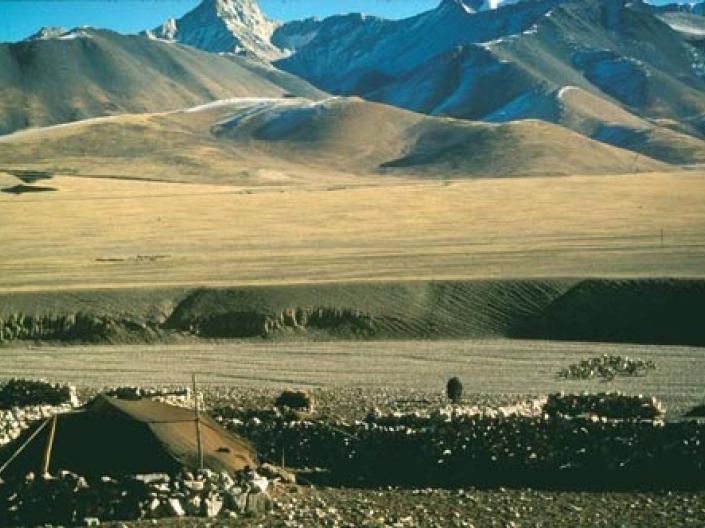
The western Sichuan, which situated in the
heat-deficient zone, is referred to the vast area between the line of Longmen
Mountains - Dadu River and Jinsha River (the upper reaches of the Yangtze
River). The total area of this region is about 236,000 km2, among
which there are 13.9 million hectares rangelands. Owing to its high altitude
and the related harsh environment, cropping is not practicable in most areas,
and the only way that the land can be used is for being grazed by animals
tolerant of the cold. With the extensive rangelands, this region becomes the
most important base for China to develop herbivore husbandry. According to the
up-to-date studies (WU, 1997c), four kinds of rangelands (high-frigid meadow,
open-woodland meadow, bush meadow and marsh meadow) including twenty-two
community types are found in western Sichuan, Meanwhile, the floristic
composition in this region is very abundant. There are about 420 species plants
distributed in these rangelands, including some 120 forage species.
2.1.2 Diversity of
Pastoral Systems
The pastoral area in western Sichuan is generally defined as an ecological zone characterized by flat plateau, rugged plateau or alpine with the elevation above 3,500 m a.s.l., rangeland vegetation, high-frigid climate, yak and Tibetan sheep grazing system, and nomadism or semi-nomadism. According to the grazing-system, it can be subdivided into two sub-sectors, i.e. pure pastoral area and agro-pastoral area.
Characterized by flat plateau or rugged plateau, animal husbandry is the mainly activity of indigenous communities in pure pastoral area. Nomadism or semi-nomadism becomes the main subsistence. There are no arable activities for crop cultivation, although sometimes herdsmen are also engaged in planting herbaceous forages near their winter houses or shelters. The 15 °C isotherm of mean temperature in July roughly corresponds to the southern border of this area (WU, 1997a).
In the agro-pastoral area, which is
characterized by rugged plateau or deeply incised mountains, pastoralism and
crop cultivation share the people's life. The composition of yak and Tibetan
sheep in livestock herds decrease apparently, and to some extent cattle and
goat mingle in livestock crowd. Besides grazing animals, the cultivation of
crops provides another important subsistence for local people. The 21 °C
isotherm of mean temperature in July can distinguish it with the fanning area.
In more detailed, a large variety of livestock
production systems, such as agro-pastoralism, sedentary pastoralism,
semi-nomadism and nomadism, can be found in this area. Generally speaking, with
increasing altitude, specially transferring into the plateau, mobility
increases and reaches the extreme in the opportunistic migratory pastoralism,
which utilizes the most marginal areas.
Apart from the spatial differentiation, the
pastoral systems in western Sichuan also present a temporal differentiation.
Because there is not an apparent difference of four seasons on the plateau
surface, the rangelands are always divided into two parts by nomads, i.e. 'cold
season pasture' and 'warm season pasture', and are used in a rotational grazing
system, namely "Two season grazing system". On the contrary, in the
mountainous region or the areas with greatly varied topography, there is also
the so-called "Three season grazing system", which including a
transitional belt between winter pasture and summer pasture support the grazing
activities in spring or autumn.
2.2 Traditional Grazing Practices Related to
Biodiversity Maintenance
Under the natural conditions of western
Sichuan, yak and sheep act as the main predators on the rangeland vegetation,
and grazing must be considered as a natural influence in rangeland ecosystems.
Rangelands grazed lightly or moderately by these animals remain stable and
productive. There are indications that light or moderate grazing can maintain
the balance between plants' species in rangeland for very long periods (PEARSE,
1970). Total protection, on the other hand, leads to stagnation of growth and
more or less complete dominance of a few species. Species diversity decreases
and productivity drops sharply (SINGH & MISRA, 1969).
2.2.1 To Exploit Environmental
Heterogeneity — Mobile Livestock Keeping
In spite of the rapid development in science
and technology, it should be in the full conviction that the physical
conditions in a region, specially climate, can not be changed, but the activity
that human utilize rangeland could be controlled. In order to adapt to harsh
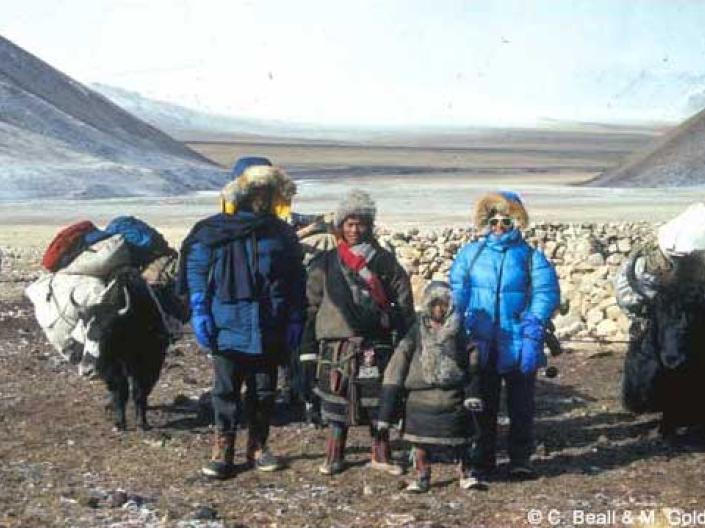
environment, the way of indigenous people's life in western Sichuan is
migration that is structured around a combination of seasonal and ecological
variables in the location of pasture and water. Survival of both herds and
herders made movement from deficit to surplus areas vital. Consequently,
pastoral mobility has become the basis for appropriate economic and ecological
land use and is the survival strategy of herders throughout western Sichuan
(WU, 1997a; 1997b).
While determining the schedule for migratory grazing, the growth of
grasses and their developing stages are always brought into consideration by
local herders. The following grazing activities thus can not impact the
re-growth of grasses or lead to the disappearance of species. The duration in
one pasture is also changeable with the different geographical locations and
different type of pastures. The migration route, from low to high altitude
pastures, is so designed to maximize the optimum use of seasonal variations in
grazing,
The sparseness and limitation of natural pastures and their geographic
location contribute to the formation of nomadic characters in western Sichuan,
Many authors (HUEBL, 1986; JANZEN, 1993) take it as an undisputed fact that
mobile livestock keeping is an optimum active human adaptation to the harsh
environment, and is probably the only way of putting the pastures to economic
use without an immense expenditure of capital. In view of biodiversity
conservation, moreover, exploiting
environmental heterogeneity (or called
ecosystem diversity) could be also thought as another ecological reason
of nomadic movement.
2.2.2 To Maintain Population Density for Recovery
As is known to all that cold stress is the most harmful factor to impact
the animal husbandly on the Qinghai-Tibet Plateau. As an insurance against
constraint events herders have to strive to increase stock numbers, in order to
provide security in case of losses, to leave a remainder of feasible size, to
rebuild his herd. This not only limits in Tibetan societies, but also is a
worldwide phenomenon. The increasing of animal numbers cannot be only
understood as a projection of prestige or an indicator of social status.
Probing into the ecological connotation, the expansion of herd size in
"normal" times, not stricken by frigid, disease or unrest, is a
survive strategy adopted by nomads, which is analogous to "r
-selection" in bionomic strategy (WU, 1997a).
The nomadic group would always want to make maximum use of pastures
available in a 'Good' year, and to minimize the potential loss of animals by
starvation during 'Bad' years. A possible reason for this is that the
considerable climatic variability experienced by these areas meant that it was
never really possible to talk about a 'Normal' year for a person outside local
system. The non-equilibrium of rangeland ecosystem or the highly dynamics of
carrying capacity is just the occurrence of ecological heterogeneity, which is
difficult to be accurately estimated before the outside people make a detailed
research. However, it has been exploited by local people with their indigenous
knowledge of alternative grazing resources.
2.2.3 A Skill for Diversity Maintenance —
Herd Diversification
Herd diversification is a risk-reducing adaptive strategy and practiced
as an insurance against major disease outbreaks since the different domestic
species are generally not susceptible to the same pathogens. Beside this, the
different dietary preferences of the various domestic species also allow for a
better utilization of pastures that may not be suited for one or the other
domestic herbivore species. In northwestern Sichuan yak are allowed to graze
together with sheep and horses. Yaks are versatile grazers, which will take a
variety of different herbage and this ability contributes to a better utilization
of the total grazing (CAI et. al, 1995). Moreover, yak consumed a variety of
forages avoided by sheep or goats, but these other ruminants in turn took large
quantities of some types of browse largely ignored by yak. Therefore, mixed
herds, rather than herds of only one type of animal, also means a traditional
way to keep plant species diversity based on the maintenance of animal
diversity.
In ecological terms, the
exploitation of heterogeneity in nomadic society involves these kinds of
optimization of foraging through local strategies of habitat division and
dispersal of grazing pressure. Quantitative and qualitative differences in
grazing pressure are maintained by hording strategies which take advantage of
animal differences in diet and mobility, whether due to species, age or gender.
These strategies do usually promote sustained-yield resource exploitation
whenever land becomes scarce, and in particular when seasonal grazing sites are
as far as inaccessible by any other ways.
2.2.4 Burning
The use of-fire has a marked effect upon the vegetation. 'More
susceptible species are eliminated directly, while others may be destroyed by
increased competition from plants which are able to regenerate more
effectively. In western Sichuan, it is believed that the decline of treeline
and extension of subalpine meadows on sunny slopes has been due to regular
burning (WINKLER, 1997). In this way, burned sunny slopes could provide more
extensive winter pastures on this warmer location; supply more fodder for animals
in winter; reduce winter fodder storage to a minimum; and diminish energy
consumption for herders in the harsh winter.
The greatest benefit of burning is probably derived from the removal of
excess litter, and its conversion into nutrients provided that enough water is
available. Burning at the time when least damage is done to the vegetation can
thus result in stimulation of growth and increase of species diversity (GRIGO,
1974). In western Sichuan where winter snowfall is important as a source of soil
water in spring, burning in the fall can affect the composition of vegetation
indirectly. Burning of the stubble and standing carry-over reduces the amount
of snow held, and increases drought susceptibility.
2.2.5 Breeding and Cross-breeding
The complex and diversified geographical and
climatic conditions in western Sichuan have provided a favorable environment
for the development of different livestock breeds. Each breed has developed
through competition, domestication, and selection over a long period of time.
While probing into the diversity of livestock, the role of nomads' indigenous
knowledge in breeding and cross-breeding should not be neglected. The livestock
breeding patterns in western Sichuan has been interpreted as the result of
adaptive responses of organisms and societies to current pressures and specific
historical processes (WU, 1998). Moreover, these patterns are in relationship
with different cultures. In the central area of Jiulong yak distribution, for
example, pure-breeding is traditionally chosen by Kham Tibetan as the main
method for selection. On the contrary, in the core of the Maiwa yak
distribution, where Amdo Tibetan are distributed, hybrids are very common. The
reason for this is that more yak exchanges take place within the tribes who
speak Amdo dialect. Owing to the accessibility of geographical location,
cross-border exchange or trading of yaks exist in whole Amdo area or even
between different ethnic groups, and male breeding cattle could be introduced
from agricultural areas for crossing purpose,
3. Development Process and Its Impacts
Traditional pastoral production systems have
remained stable for a long time, particularly through flexible responses to
short-term variations of the climatic conditions. Today, however, numerous
demographic and economic changes of long-term nature occur which trigger
adaptive changes likely to transform this system significantly.
3.1 Market
The nomads' strategy aims at securing a rapid conversion of the growing vegetation by their animals, which is subject to erratic weather patterns. Meanwhile, schemes of pastoral development are also assessed with herd off-take and marketed animals. However, isolation, remoteness and primitive marketing systems in western Sichuan are some of the handicaps faced by livestock production. An inefficient marketing outlet reduces revenue and discourages expanded commercial off-take, and even lead to the increase of practical carrying capacity on the rangelands. Although the private channels are never blocked, its capacity is still limit. Under the situation changing from subsistence system to more marketing orientation, at least some herder owners would be given an impetus to trade and to breed more animals which are in good prospects in terms of price. However, if there are not appropriate infrastructural facilities meeting the- needs of the people and the flows of animal products, the prospective benefits cannot be realized and the overstock is inevitable.
On the other hand, insufficient plan for
market development has also led to new problems for rangeland conservation. In
Hongyuan County, for example, in order to sell surplus milk to a milk-powder
factory (located in town) and collect milk from July to August (done along the
main roads), herdsmen have to stay a minimal distance away from main roads. The
pastures available within this range, however, are winter grazing lands that
have just been used during the cold months. As such, marketing forces are
impacting vegetation and create rangeland shortages. Herders remain in rich
summer pastures two months less than they did before the introduction of the
market economy; winter pastures are used an extra month each year. Although the
spring pastures provide some buffer, it is also undeniable that winter pastures
are overstocked and overgrazed.
3.2 Enclosure of Rangelands
At the beginning, enclosure of rangelands in
western Sichuan was practiced for hay production in order to supply winter
fodder for domestic livestock. At present, however, this practice has come to
delineate pasture boundaries and divide pastures for rotational grazing. From a
biological perspective, the construction of fences is undoubtedly beneficial to
grass growth. Furthermore, if such enclosure is only practices on a small
scale, it will help alleviate winter fodder shortages.
Although the potential of enclosed range areas
is slightly higher than open ranges, enclosed ranges are not immune to
diminishing range conditions, particularly when grazing management issues or
the effects of large-scale enclosures are considered. Stocking densities are
rarely matched to carrying capacity, but rather suit to the demands of the
stock owners (BEHNKE et, al, 1993). Additionally, erratic spatial distribution
of precipitation or unpredictable snowstorms may reduce forage growth in some
enclosed areas. This can lead to temporary but severe overstocking,
irreversible rangeland degradation, and the collapse of animal production and
marketing systems. Furthermore, enclosed pasture involves heavy capital investment
in land improvements. It hardly popularized effectively in a nomadic system if
there is not sustainable financial support from governments.
3.3 'Sedentarization'
'Sedentarization' indicates a changing process in
lifestyle from a nomadic to a more sedentary existence. In western Sichuan, the
expansion of modern sedentarization is under the way to a large scale. Some of
the benefits of this practice for pastoral production have occurred already,
such as reliable and easily accessible animal health programs, increased
availability of supplementary feed in winter, a rise in the survival rate of
newborns, and lower spring mortality rates. However, shifts from a long-ranging
and highly mobile hording system to a short-range and/or sedentary system
involve some potential negative effects on biodiversity.
At first, sedentarization implies an increased risk of environmental degradation, as it is always accompanied by the enclosure of pastures in a large scale. Short-range hording systems have deleterious effects on range vegetation and soils. Grazing pressure on the residual open range is becoming exhaustive and migrations have to be re-routed. A lot of palatable grasses disappear in the vicinity of permanent settlements. Since the areas with higher potential are usually enclosed first, the residual areas possess lower support capacities and are prone to faster degradation.
Secondly, the disappearance of traditional adaptive management systems
increases production risks for both individual herd owners and larger industries.
One of the main purposes of 'settling down' nomads is to maintain adequate
stocking rates and practice some forms of grazing rotation. However, almost all
pastoral economic strategies not only focus on current production but also
relate to long-term production security, given the possibility of severe
environmental fluctuations. This is to say that nomadic economics rely on sound
strategies for both short-term productivity and longer-term insurance. Every
attempt which only part of a system is changed will lead to the unbalance in
whole system.
3.4 Introduction and-Cultivation of Forage Grasses
Shortage of fodder in winter and spring
grazing is one of the main constraints on animal production in western Sichuan.
Thus, the germ plasmas of grasses have been taken as a very important factor
for the sustainable development of animal husbandry. Since the 1960s,
researches on forage selection and cultivation have never been interrupted. Up
to now, more than 200 varieties of forage plants, belonging to 16 families, 49
genera and 98 species, have been collected or introduced, and tested in the
pastoral areas. In fact, the introduction and selection of herbaceous plants
for hay meadows is a kind of in-situ conservation of genetic diversity.
The rehabilitation of degraded rangelands with the indigenous and/or introduced
species has already created a more diversified gene-bank.
4. Conclusion
Over the past decade, the environmental
changes and economic development on the Qinghai-Tibet Plateau have accelerated,
creating a serious impact on biodiversity, natural resources and landscapes.
The biodiversity base on this Plateau is deteriorating more rapidly than many
other global ecosystems (IVES and MESSERLI, 1989). However, it is fortunate
that in traditionally pastoral communities, one can still find a strong sense
of community and social responsibility to conserve biodiversity surrounding
their habitats with the help of their lifestyles, religion, and interdependent
relationships established with nature. This kind of traditional attitudes and
behavior reveal a deep-rooted pastoral culture. In conclusion, I wish to
propose a few urgent needs if sustainable pastoralism on the highland is going
to be more than just another development fad.
•
There is a clear need to raise public awareness concerning of nomads'
indigenous knowledge systems in the conservation of biodiversity and
sustainable use of natural resources. The preservation of the nomads' extensive
traditional knowledge about biodiversity maintenance is one particularly
important point. Indigenous Knowledge of nomads should be scientifically
investigated so that they can be integrated in the practical planning and
implementation of development projects.
• There is the principal requirement to ensure the maximum possible geographical mobility for nomads, because the dispersal of animals limits the pressure of grazing on any one pasture at one time and is the only way of guaranteeing the greatest degree of conservation of biodiversity.
• The basic principle for resolving the disequilibrium between fodder and animals is that the kinds and the levels of production must be determined by the quantity of foodstuffs. That is to say, in the light of what types of rangeland or foodstuff (plant biodiversity) we have, we can then determine the suitable species and breeds of grazing animals (animal biodiversity) accordingly; in the light of how much rangeland and fodder we have, then we can decide the number of animals accordingly may be allowed.
• For future developmental planning, the attraction of an increasing market economy has to be weighed against the risk of biodiversity decline. Today the system of production is still more or less balanced, but it is already being used at close to its maximum intensity and is therefore highly vulnerable. For this reason it should not be submitted to the uncontrolled and continually changing market interests which follow from an increasing demand for animal products.
• There is a need to create
mechanisms at different levels in order to effectively monitor and evaluate
programs-dealing with biodiversity conservation, in order to ensure full
accountability for policy-making, implementation and impact. At the present
stage of (regional) biodiversity erosion it is urgently necessary to collect a
more detailed data base on regional and even local level, which can serve as a
starting point for detailed management planning of biodiversity.
Acknowledgements
I would like to acknowledge financial supports from the Chinese Natural
Science Foundation (49601018), National Geographic Society (5947-97) and the
Chinese Academy of Science (KZ 951-AI-104-03) for my field studies.
Bibliography
BEHNKE, R. H.; SCOONES, I; and C. KERVEN, 1993: Range Ecology at
Disequilibrium - New Models of Natural Variability and Pastoral Adaptation in
African Savannas. Published by Overseas Development Institute. London.
BRJGGS, D. J. and F. M. COURTNEY, 1985: Agriculture and Environment, The
Physical Geography of Temperate Agricultural Systems. Longman Group Limited.
London and New York.
CAI, LI and G. WIENER (1995): The Yak, Published by the Regional Office
for Asia and the Pacific of FAO of the United Nations. Bangkok, Thailand.
DAHLBERG, K.A., 1987: Redefining Development Priorities - Genetic
Diversity and Agro-ecodevelopment. Conservation Biology, 1(4).
GRIGG, D. B„ 1974: The Agricultural system of the World: An Evolutionary
Approach. Cambridge University Press, Cambridge, UK.
HUEBL, K. 1986: The Nomadic Livestock Production System of Somalia. In:
Somalia, Agriculture in the Winds of Change. - Epi-dokumentation No. 2: 55-72.
Eschborn.
IVES, D. J. and B. MESSERLI, 1989: The Himalayan Dilemma - Reconciling Development and Conservation. London: Routledge.
JANZEN, J., 1993: Mobile Livestock Keeping in Somalia - General Situation and Prospects of a Way of Life Undergoing Fundamental Change. In: Pastoral Production in Central Somalia, BAUMANN, M. P. 0., JANZEN, J. and H. J. SCHWARTZ (eds.). OTZ, Eschborn.
MILLER, J. D. 1995: Herds on the Move - Winds
of Change among Pastoralists in the Himalayas and on the Tibetan Plateau.
Discussion Paper Series No. MNR 95/2. ICIMOD. Kathmandu, Nepal.
PEARSE, C. K., 1970: Range deterioration in
the Middle East. Proc. XI Int. Grassland Cong., Univ. Queensland Press. St.
Lucia. 26-30.
SCHOLZ, F., 1995: Nomadismus - Theorie und
Wandel einer sozio-oekologischen Kulturweise. Erdkundliches Wissen,, Band 118,
Stuttgart: Franz Steiner Verlag.
SINGH, J. S. and MISRA, R., 1969: Diversity,
Dominance, Stability and Net Production in the Grasslands at Varnish, India.
Can. Journ. Bot. 47:425-427.
USAID, 1993: African Biodiversity - Foundation
for the Future Biodiversity Support Program. A framework for integrating
biodiversity conservation and sustainable development. Maryland: USAID consortium
of World Wildlife Fund, The Nature of Conservancy, and World Resources
Institute.
WINKLER, D., 1996: Forests, Forest Economy and
Deforestation in the Tibetan Prefectures of West Sichuan. Commonwealth Forestry
Review, 75(4): 296-301.
WU NING, 1997 (a): Indigenous Knowledge and
Sustainable Approaches for the Maintenance of Biodiversity in Nomadic Society -
Experience from Eastern Tibetan Plateau. Die Erde, 128: 67-80.
_______, 1997 (b): Conservation of Yak
Biodiversity and Its Development Potential in Western Sichuan, China. In:
MILLER, D. J., CRAIG, S. R. and G. M. RANA (eds.), Conservation and Management
of Yak Genetic Diversity. Kathmandu: ICIMOD & FAO. 131-163.
_______, 1997 (C): Rangeland Resources and Conditions in
Western Sichuan. In: Rangelands and Pastoral Development in the Hindu
Kush-Himalayas - Proceedings of a Regional Experts' Meeting at Kathmandu,
Nepal, November 5-7, 1996, Eds. MILLER, D. J. and CRAIG, S. R., Kathmandu:
ICIMOD. 23-40.
_______, 1998: Nomads' Indigenous Knowledge of
Yak Breeding and Cross-breeding in Western Sichuan, China. Indigenous Knowledge
and Development Monitor 6(1), 7-9.