Decline and re-emergence of nomadism:
Tibetan pastoralists revive a nomadic way of
life and production
A. Manderscheid
Department of Geography, University of
Oulu, 90014, Oulu, Finland (Tel.: +358-8-553-1695;
Fax: +358-8-553-J693;
E-mail: angela. manderscheid@oulu.fi)
Received 13 July 2001;
accepted 31 January 2002
Key words: Lapland, mobile animal husbandry,
nomadism, reindeer husbandry, revival, Tibetan pastoralists
Abstract
Numerous examples worldwide demonstrate the displacement of a nomadic
way of life and economy, with common features in the diverse regional contexts
shown. Sometimes the pastoralists can respond with other forms of mobile
hording, as for instance the current reindeer husbandry in northern
Penno-Scandia or Lapland suggests. An extensive form of herding management has
succeeded an intensive one; nowadays the reindeer roam freely nearly all year
round, and the reindeer owners live sedentary. Modem technologies support the
animal husbandry. However, a decline in nomadism can also be followed by a
revival. Records exist about re-emergence from, among others, the Mongolian
Republic and the Tibetan plateau. The nomadic lifestyle of Tibetans was
displaced, as in the other pastoral regions of China, for two decades. Its
re-emergence in one region of the eastern Tibetan plateau in the early 1990s is
analysed in this paper. Among the framework conditions which promoted the
revival was the return of the livestock as family property. Some revived
features of nomadism are identical to the pre-Collectivisation period. Other
features were adapted to changed contexts. The revival had further a different
impact on those groups which rely exclusively on animal husbandry and those
which combine livestock breeding with field cultivation. However, the re-emerged
nomadism is already disappearing again. In order to put the issues of mobile
animal husbandry into a larger context, some comparative aspects of recent
mobile animal husbandry in the pastoral regions of Sichuan province and Lapland
are discussed.
Introduction
New borders, reduction of pasture tenures in favour of arable farmland,
industrial projects, exploration of natural resources, nature reserves and
sedentarisation projects among the causes which force pastoralists worldwide
give up a nomadic lifestyle. Sometimes the pastoralists can respond by
resorting to other forms of mobile animal husbandry, as the example of Saami
reindeer herders in Europe's Lapland illustrates. After a decline, there follow
a revival of nomadic lifestyle, yet such records rare. Revivals have been
reported from Mongolia (Bruun, 1996; Humphrey and Sneath, 1999; Müller, 1999;
Rasmussen et al., 1999) and the Tibetan plateau (Goldstein and
Beall, 1990; Goldstein, 1994; Manderscheid, 1999). Scholz (1995) draws a global
thesis on the decline and re-emergence of nomadism and writes: Nomadism was
able to develop again and again in
a new and original form, at any
place and any time, given a certain, regionally
specific, ecological and socio-political setting
(p. 250).
Nowadays, in academic discussions on pastoralism, the
term 'mobile pastoralism' often is favoured to ‘nomadism’ or 'nomadic
pastoralism'. Humphrey and Sneath (1999) argue that the very
category of nomadism has ceased to be
useful analytically. (p. 1). Mobility makes the case for the
continuation of pastoralism in the twentieth century. Mobility here
is seen as a technique that is
applicable in a range of institutions,
rather than as a holistic life-style suggested
by the word 'nomad' (p. 16). I agree with the statement,
yet are in this paper I would like to write about 'nomads'. I argue to that in the case of Tibetan pastoralists,
they have been nomads in the sense of the definition given below until this
lifestyle was displaced. Decisive for my argument are the northern features
that have been revived which distinguish a nomadic might lifestyle from other
forms of mobile animal husbandry, e.g., from mobile pastoralism or ranching
management. Being a nomad includes here: (1) practising mainly or solely animal
husbandry as a means of subsistence; (2) using natural pastures (rangelands) as
the basis of forage; (3) being forced to change the space of activity according
to the availability of pastures and the needs of the animals; (4) the husbandry
tasks are divided among family members (family enterprise); (5) the economic
production is essentially subsistence-based (after Dyson-Hudson and
Dyson-Hudson,
1980; Saizman and
Galaty, 1990; Scholz, 1994, 1995).
Not all the features listed here are commonly required as prerequisites
of nomadism and not all features reflect equally the nomad's self-image. For
Tibetan nomads, Goldstein and Beall (1990) point out, for example, that their
own self-image focuses primarily on being
complete pastoralists (i.e., practising, no farming)
rather than on moving their herds (nomadism)
or even living in tents, (p. 64). Further,
nomadism is understood here as a way of life, which is actually practised, and
not as a value orientation (see Saizman and Galaty, 1990). In addition to
raising livestock, trading, fishing, hunting, gathering and farming may also be
practised, but animal husbandry has to be the main determinant of production
and mobility. If the nomads engage in fieldcultivation as a secondary activity,
we speak of semi-nomads or agro-pastoralists.
It is not the concern of this paper to examine the conditions under
which nomadism reappeared, rather we analyse the re-emerged nomadism in one
region on the eastern Tibetan plateau. Detailed investigations on nomadism in
Tibet are still rare. This study draws its material from intense field research
among Tibetan nomadic groups in the northwest of the Sichuan province during
the years 1989-1993. Additional information from another research region was
collected during two recent field-stays (2000 and 2001). The revived nomadism
is about to vanish again, which poses a question about the future direction of
mobile animal husbandry. The issues on the Tibetan plateau should not be
discussed as an isolated case, since features of these developments are similar
in different regional contexts. For this purpose, the reindeer husbandry in
Lapland was chosen, which seems at first sight far-fetched. The regions are far
apart, the livestock under discussion is different etc. However, since I live
adjacent to the reindeer husbandry area in Finland and have insight into the
current matters being discussed and the research being done on this topic, I
realized that issues for the herders and topics discussed by experts are quite
similar in both of the regions. Examples are the threat of too little and
degraded winter pastures, increased livestock numbers and supplementary
feeding. Other matters like the transition from a subsistence economy to market
production, which started in the Tibetan research area in the 1980s, occurred
in Lapland much earlier. Compared to the animal husbandry on the Tibetan
plateau, the reindeer husbandry of Lapland is well-studied. The material used
here is drawn from publications, mainly in English, and from personal contacts.
The main objective of this paper is to analyse the nomadism which has
re-emerged on the eastern Tibetan plateau. A description of the decline of a
nomadic way of life and production in Lapland provides the background for a
comparative discussion of some aspects of recent mobile animal husbandry in
both of the regions.
Decline of nomadism on the Tibetan
plateau
Before the nomadic
lifestyle was displaced on the Tibetan plateau, about half of the entire
Tibetan population lived as nomads. Individual families owned the livestock,
and the pasture grounds were used in common, but they were the property of and
controlled by landowners (e.g., aristocrats, high lamas, monasteries) or tribal
affiliations. Two political events changed the indigenous pastoral production
system on the Tibetan plateau completely, just as in other pastoral areas of
China (e.g., Inner Mongolia and Xinjiang): the so called 'Liberalisation' of
the country by the Red Army, and the reform policies under Deng Xiaoping. This
period between 1958 and the early 1980s, will be referred to as the
'Collectivisation period'. Others discuss the impact of this time on the
pastoral production systems in Tibet in detail (Clarke, 1987; Goldstein, 1994;
Wu Ning, 1999). Here I will point out why the lifestyle of the pastoralists
during the Collectivisation period can no longer be considered 'nomadic'.
How far a full collectivisation of all pastoralists could be carried out
in the area in question here did not become quite clear.1 The
pastoralists were restructured into communes step by step, the domestic animals
were collectivised, land tenure of pastures was transferred to the state and
the leaders of the centrally administrated communes decided on the animal
husbandry management. Some units of the commune were assigned to pasture the
livestock. They moved with the herd to the seasonal pastures taking along
mobile housing. Sedentary members of the collective took over the milk
processing, the production of winter fodder etc. Clarke (1987, p. 35) has
described the animal husbandry management during the Collectivisation period
for Pemuthang, in the Tibet Autonomous Region (TAR), as follows: The livestock
was divided up into four herds for
management under four committees, these being
the same as the four traditional groups
of livestock which had their traditional
allocation of pasture, and were moved much
as today, up and down the valley according
to season. Though each household was
allocated to a herd, families could be
split up, especially if one member had
a different function, such as driving
a horse and cart.
This illustrates that some structures of herding management remained the
same as in the pre-Collectivisation period, yet the pastoral production system
during the Collectivisation period can no longer be called 'nomadic'.
In the late 1970s, the Chinese agrarian policy attempted to reform the
agricultural and animal husbandry sector, which brought decollectivization and
a turn to a market-oriented economy. The communes were dissolved and the
livestock was divided among the former nomads. Central planning was replaced
with controlled management on a household level and the families became once
again responsible for the livestock and the marketing of their products
(household production responsibility system). The pasture tenure remained state
property, but was gradually contracted to the households on a leasing base.
Dzamthangs pastoralists revive a nomadic
lifestyle
The research in the
eastern part of the Tibetan plateau in the year 1989 began with the initial
concept of displaced nomadism. I was surprised to find that the life and
economic patterns of the pastoralists visited presented themselves as I
imagined them to have been before the Collectivisation period.
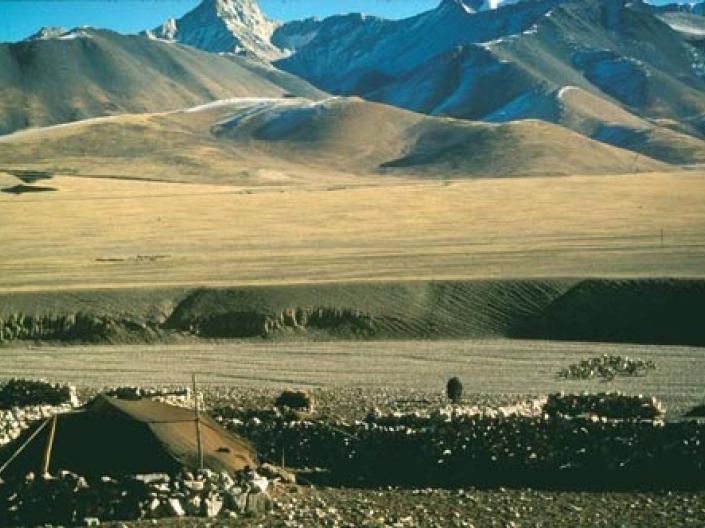
The Tibetan research
area, Dzamthang county, is located in the north-west of Sichuan province
(Figure 1). The undulating plateau of the north-east of Dzamthang and the
deeply dissected mountainous landscape of the south-west provide the ecological
context for diverse land use. The alpine meadows, which stretch from 3,600 m
upwards are suited for mobile animal husbandry. Winter pastures and winter
houses are located between 3,600 m and 3,800 m. Above this lies the nomads'
summer area of activity where they set up their tents and use the adjacent
meadows up to 4,500 m as pastures. The zone between 2,650 m and 3,600 m is
suitable for arable field cultivation, and the agro-pastoralist groups have
fields and permanent houses there. On the whole, animal husbandry is the
prevailing sector of production, but more than half of the nomads conduct field
cultivation the extent of which varies regionally (Manderscheid, 1998).

After the livestock
management returned to the individual household, the animal husbandry tasks
were divided again among the family members. The division of labour is clearly
gender specific: the duties of women are milking, milk processing and all other
tasks in and around the tent. Men carry out the work which leads away from the
tent, including the grazing of the livestock, trade and grain milling in the
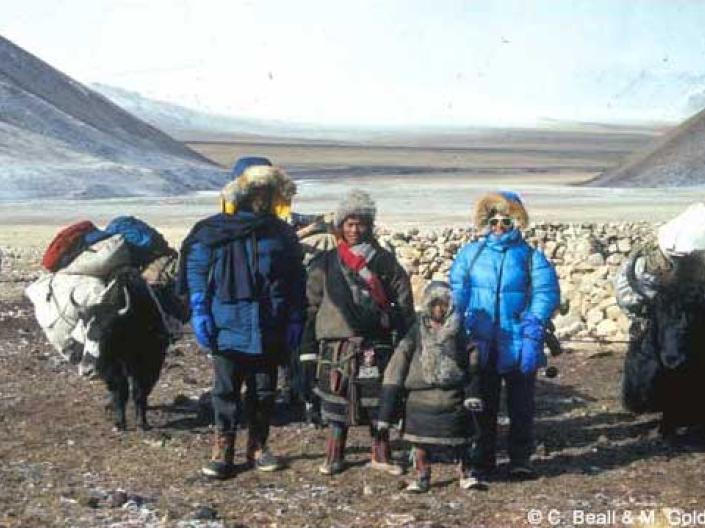
district or settlement centres. In Dzamthang, most children lived mobile with
their parents in the early 1990s, and took over animal husbandry tasks. The
majority did not attend a school. The older daughters assist in milking, and
centrifuging the milk, and the boys take over the herding.

All family members migrate
again with the livestock to the seasonal pastures, and live from spring to
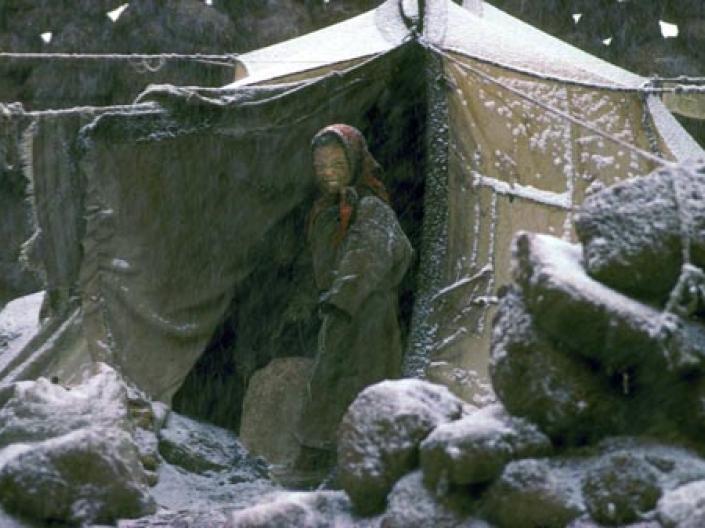
autumn in a 'black tent' (Manderscheid, 2001). The seasonal migrations of the
entire family, as well as the division of animal husbandry tasks among family
members, are features of a nomadic lifestyle, and have been revived in
Dzamthang.

The livestock of Tibetan nomads consists of yak, sheep, goats and horses, the amount of which varies regionally. In Dzamthang, the number of yak in the herd composition had decreased to 60% in 1975, but reached 80% again in 1985, the same as it had been before the 1950s (Figure 3). The pastoralists of Dzamthang reported that they were proud to be yak breeders and despised small stock. Administrative directives during the Collectivisation period had aimed at increasing the amount of small animals. In the opinion of the state planners, small animals were considered to be more productive then yak. After decollectivisation, due to their value system, the nomads sold the surplus to the neighbouring farming areas south of Dzamthang. With this the families decided to base their herding management on the traditional herd composition.
Additionally, the nomads returned to a subsistence-based economy, which also appeared in Russia and Mongolia after decollectivisation. In China rapid economic differentiation among herders has meant that some are able to use opportunities to their advantage, while others are only subject to market vagaries and depend largely on subsistence production. (Humphrey and Sneath, 1999, p. 57). Such a differentiation on a local level matches the cases of Inner Mongolia, and the pastoral areas of the Tibetan plateau which offer marketing possibilities for nomadic products. In Hongyuan county (see Figure 1) for instance, most nomads are eager to sell milk to the milk powder factory, which was established already in 1956. In Dzamthang, however, there existed only few marketing opportunities in the early 1990s, and the nomads had not much choice other than reviving a subsistence-based economy. Mainly the family consumes the produced goods, and only small amounts are traded for a cash income. An average family, which owns about 60 animals, slaughters one yak a year for their own consumption, and sell or trade 5 or 6 yaks. The income generated is used to procure basic commodities like barley, tea and cloths. Second in importance is the sale of butter. A part of the annual butter production is stored as a hidden reserve, and larger amounts are sold when a need for cash arises, e.g., to pay taxes or to buy a horse. Milk and small animals play no role in trade. On the other hand, the collecting of medicinal herbs (e.g., Fritillaria cirrhosa or padma) and mushrooms (e.g., Tricholoma matsukate) has increased during recent years, and this is directed by market forces. The pine mushroom, which is mainly exported to Japan, is known as 'white gold', and 1 jin (~l/2 kg) was sold for US$ 120 in autumn 2000 on local markets in eastern Tibet (Page, 2000). Trading medicinal herbs and mushrooms is an indicator of an increased interest and need among the nomads for cash income and a market production.
The revitalisation of the nomadic way of life and production in
Dzamthang is not a mere copy of the 'old' lifestyle. The nomads adapted some
features to the changed ecological, political and economic contexts. This can
be illustrated with some further examples: unlike agro-pastoralist, the nomadic
groups that relied entirely on animal husbandry (Tibetan: 'Brog pa)
did not own winter houses before the Collectivisation period. However, with the
revival of a nomadic lifestyle the 'Brog pa did not give up their
winter houses. According to recent governmental directives, all families must
have a winter house. But quite apart from this, some pastoralists also stated
they appreciate the comfort of stable housing during winter. Before the
Collectivisation period, the head of the nomadic tribe or the landowner fixed
the dates for the seasonal migrations of the nomadic households. Nowadays, the
dates are set and controlled by state institutions, like the Animal Husbandry
Bureau at the district level. The latest date at which the pastoralists should
have left the winter pastures, and the earliest date of return are announced to
the families by the head of the settlement. Grain requirements were procured
during the Collectivisation period with subsidised grain vouchers (Hang piao)
from the State Grain Bureau. Since the phasing out of this grain procurement
system in the 1990s, the pastoralists have bought grain from the markets, and
direct trade with farmers has been revived. Following the harvest in 1991, I
met a nomad who had rented a truck by which he transported grain to the
neighbouring county. He had revived the 'old' grain trade between Dzamthang and
Serthar. One could assume that the cessation of the grain vouchers system might
have lead to greater activity in field cultivation among the agro-pastoralist
groups; this, however, has not been the case.
Agro-pastoralists' expand animal husbandry at
the expense of field cultivation
What is most
remarkable, however, is that the specific feature that most clearly determines
nomadism - the animal husbandry or, here, yak-breeding - expanded
significantly. Several indicators suggest this. First, the increased number of
livestock presented in Chinese statistics should be discussed.2
The number of yak in Dzamthang increased permanently between 1950 and
1985. This trend was interrupted only between 1957 and 1962, and between 1965
and 1970 (Figure 4). The data valid for the entire Tibetan Autonomous
Prefecture Aba, which governs the Dzamthang county, suggests that the nomads
continued to accumulate livestock in the late 1980s (Sichuan Statistical
Bureau, 1992). An increase is reported from other inner Asian pastoral areas as
well. The aim of most households in all
sites appeared to be to increase the number
of their animals by consuming or selling
as few as possible. (Humphrey and Sneath, 1999, p.
275). The accumulation is motivated by the pastoral strategy that having much
livestock guarantees the survival of a sufficient number of animals in bad
times, e.g., if natural hazards occur, and wealth on the hoof has a high status
value for pastoralists worldwide. Levine (1999) noticed that the pastoralists
in the neighbouring Serthar county were, during her research in 1994, reluctant
to sell animals for cultural-religious and practical reasons. From the moment
the herding management decisions were made again to a certain extent by the
pastoralists themselves, they revived such 'old' values.

From a closer look at the trend in the livestock growth rates it becomes
clear that the increase is most significant in Dzamthang in those districts
where the nomads combine animal husbandry with field-cultivation, although
animal husbandry does predominate. The agro-pastoralist families decided to
expand animal husbandry at the expense of their secondary form of production,
field cultivation. While prior to 1958, the agro-pastoralists occupied only the
pastures close to the farming areas, the current enlarged herds make necessary
migration to more and more remote rangelands, so that the distances from there
to the farming areas increase significantly. The effect is that these families do
not migrate regularly any more from the high altitude summer pastures to the
fields for weeding, and they let the fields lay fallow every second year
instead of cultivating peas as a rotation crop. It even happens that families
do not bring in the harvest at all.
The increased importance of mobile animal husbandry in the economic
activity of the agro-pastoralists is indicated furthermore by factors such as
the permanent houses being left vacant throughout the year in the farming areas
(see Figure 5). Before Collectivisation, the houses were the home base of the
families. Now they live exclusively in tents and in winter houses, like the
pure animal breeders. The farming houses are visited by the head of the
household and his wife only for short periods, e.g., in autumn to bring the
harvest in and in spring for sowing grain. Older family members who no longer
engage in animal husbandry, might live in the completely furnished houses.
However, the agro-pastoralists do not want to give up the houses, and young couples
build new permanent houses even if their present form of production requires
them to live in a tent and winter house.

Changed political contexts allowed this shift towards
animal husbandry to occur, but what motivated the agro-pastoralists (Sa ma
'brog) to seek this shift in Dzamthang? Being a 'Brog pa
and owning much livestock had high prestige in the old Tibetan society. Downs
(1964) reconstructed the traditional relationship between 'Brog pa
and Sa ma 'brog in a community now located in the Tibetan
Autonomous Region (TAR), as it existed before his informants went into exile. All
our Tibetan informants gave the impression that
the nomad life was prestigeous and their
accounts of semi-nomad families suggested that
these people attempt in every way possible
to imitate nomads in dress and manner,
(p. 1118). With their reallocated livestock and less state control, the Sa
ma 'brog could concentrate on animal breeding, and work towards
the traditionally valued 'Brog pa status. Furthermore, economic reasons
motivated the Sa ma 'brog groups in question to decrease field
cultivation in favour of animal husbandry. In 1985, with the introduction of
the 'contract grain procurement system', the selling price for contracted
grains decreased and grain production was not attractive anymore (Schwarz,
1998). Despite price adjustments and subsidies,
grain production during the reform era
remains a poor investment for household labor
and capital. (Veeck and Shaohua, 2000, p. 78). The returns for
livestock sales are better than for grain in the whole of China.
In the Mongolian Republic, the attraction of animal husbandry is reflected in the emergence of the so-called 'new nomads'. Following decolletivisation, they had been drawn away from a sedentary lifestyle in the cities or state farms, and started to conduct mobile animal husbandry in the steppe regions (Bruun, 1996; Miiller, 1999).
As we have seen, the
nomads of Dzamthang shifted their economic production towards animal husbandry.
However, larger stocks did not result in market-oriented production. The
example of Hongyuan county with both a milk powder and a meat processing
factory illustrates the possible shift to a market production. There, the
pastoralists rarely returned to a nomadic lifestyle. The animal husbandry
stayed mobile with the root family living a sedentary existence in a permanent
house. Pastoral production is directed by market forces. Those pastoralists
questioned consider themselves as 'nomads', yet this corresponds more to a
value orientation than to an actual lifestyle. Although Honyuan is a 'model'
case for state development policy intentions for the pastoral areas of China,
it shows that the revival of a 'nomadic lifestyle' is not homogeneous
throughout all parts of the Tibetan plateau.
It was the nomadic way of life and production based on a subsistence
economy, on the family as the production unit which migrates between seasonal
pasture grounds and on large stock, which the pastoralists of Dzamthang could
apply successfully as a strategy for survival after the state withdrawal from
organizing their lives. However, the well-probed and flexible nomadic way of
life and production is threatened with extinction again. The fencing of
individual seasonal pasture tenures according to governmental directives, for
instance, reduces the mobility of the herd, and encourages sedentary
lifestyles. The condition of the natural environment already speaks of the
negative impacts of these measures. Furthermore, the increased need for a cash
income is inconsistent with a self-subsistent nomadic economy. Some of the
young nomads interviewed in recent years were not very eager to continue their
lives as nomads under the prevailing conditions. However, most had no vision of
alternatives. Some were interested in jobs outside the pastoral sector,
especially in trade.
The displacement of nomadic pastoralism
in Lapland
The case of a revival of nomadism after displacement is put aside for a
moment, and the decline of a nomadic lifestyle in Lapland and the later
established animal husbandry system will be described. The area where reindeer
husbandry is carried out stretches from Central Norway and Sweden, through the
northernmost part of Finland, into the Kola Peninsula in Russia. The Saami
occupy about the same living space (Figure 6). As hunters and fishermen they
came in the past from the Russian interior and populated Fenno-Scandia. With
the increasing scarcity of game, other activities became more important, e.g.
those who lived in regions suitable for agriculture started field cultivation.
Other groups began to tame reindeer (around 16th century), and became part-time
pastoralists. According to Vorren and Manker (1962) reindeer nomadism came as
an exclusive form of subsistence from the east to Fenno-Scandia and adapted to
existing forms of reindeer breeding. The 17th century was the century of the
reindeer, and reindeer husbandry expanded largely (Aikio et al.,
1994). Reindeer were kept for meat production and for milking as well.
Even if the (old) lifestyle of all Saami groups is
often called 'nomadic', only the lifestyle of those who relied entirely on
reindeer husbandry (Mountain Saami and Forest Saami) corresponds to nomadism in
the context here.3 Reindeer breeding was and still is valued as
'the' Saami means of livelihood, and the distinctive style of the Mountain
Saami makes up much of this image (Aikio et al., 1994; Ingold
1976). However, for most Saami families reindeer breeding cannot provide the
main livelihood (see, e.g., Filppa, 1999; Lenstra, 1998). Until the end of the
last century, the Saami society was organised in units (Saami: siida)
often families who migrated together in a fixed territory, had their animals in
a common herd, and their dwellings were set up together (Manker, 1953).
Affiliation to a herding co-operative (in Finland known as a paliskunta)
was later administratively imposed and gradually replaced the siida-system.
In Finland, Finns as well as Saami, own reindeer. Only 30% of the entire
reindeer stock is owned by Saami, yet as a source of income, reindeer herding
is more important to Saami than to Finns (Kitti, 1999). In Norwegian Lapland,
the possession of reindeer is the exclusive right of Saami. This differs from
the policies in Sweden where only Saami whose parents were already reindeer breeders
are allowed to own reindeer.
The events which led to the displacement of a nomadic
lifestyle in Lapland included the closing of international borders, the
so-called snowmobile revolution, and the pressure to fixed settlement (Ingold,
1976; Pelto, 1973). With the closure of the Norwegian/Finnish border in 1853,
and the Finnish/Swedish border in 1889, the traditional migration routes of the
Mountain Saami were cut off (Helle, 1966). The Reindeer Pasture Agreement
between Sweden and Norway from 19194 allowed only in the
northernmost districts in Norway summer migrations of Mountain Saami from the
fjell zone to the coniferous forest zone over the border (Manker, 1953; Vorren
and Manker, 1962). The pastoralists'responses have been described by Lenstra (1998):
The Saami reindeer breeders in
the border area of the three countries
were forced to make choices and seek
solutions which illustrate in a singular way
their adaptability (change of citizenship), and
spirit of enterprise (search for new
pasture areas). As consequences of a demarcation
of the borders, ten reindeer breeding
Saami families from the research region Enentekiö
moved to the north-eastern part of Finnish
Lapland. For many others this meant giving
up reindeer breeding as a mode of existence,
(p. 354).
Due
to Lapland's prolonged snow cover of seven or eight months, Saami herders on
skis and herding dogs directed the herd in the past, and reindeer drawn sleds
were used during migration trips for transportation. In the early 1960s, the first snowmobiles entered into reindeer
pastoralist's life; this significantly changed herding management. While the
reindeer earlier followed the pastoralist on migration trips, the herder with
the snowmobile drives the animals from behind by restricting the path of escape
(Pelto, 1973). The use of snowmobiles helps to save time e.g. to round up the
animals, and it increases the mobility of the herders. The distance between
residential place and herd could be made longer, which allowed more sedentary
lifestyles. In Norway, for instance, the families settled in Tundra villages
like Kautokeino (see Figure 6), a former winter activity space. The herding
became entirely men's work. Children could attend school all year round, and
women and children lost herding knowledge (Paine, 1994). The lifestyle of the
reindeer owning households is no longer nomadic, though the animal husbandry
system remains mobile. The earlier intensive herding management has step by
step been displaced by more extensive forms of management, which Ingold (1980)
calls a 'ranching economy'. Characteristic of a ranching system is that the
animals are kept in huge fenced pasture tenures, the input of labour is small
and they are no longer kept for self consumption but to sell on markets.
Nowadays, the reindeer in Lapland roam at liberty most of the year. Natural
borders and permanent fences are used in an attempt to keep apart the animals
of the different herding cooperatives. According to the size of the herding
co-operative, the fenced areas in Finland are between 300 and 2,500 km2.
At least two times a year, the animals are rounded up, in summer to mark the
calves, and in early winter to select animals for marketing. They are no longer
domestic animals but 'semidomesticated'. It is difficult to imagine that in
Lapland nomadism could re-emerge as happened on the Tibetan plateau.
Comparative aspects of
recent mobile animal husbandry on the Tibetan
plateau and in Lapland
The re-emerged nomadic way of life and production in Dzamthang could
only represent a strategy for survival in the mid-term. New governmental
directives and the increased need for a cash income force the herders and those
responsible for developing and administrating the pastoral areas to respond to
those changed conditions. In order to discuss here mobile animal husbandry in a
larger context, some aspects of its recent forms on the eastern Tibetan plateau
and in Lapland are discussed comparatively.

Before the 1950s, the lifestyle of about one half of
the entire Tibetan population was nomadic, while in Lapland only the Mountain
Saami and Forest Saami, and only then over three or four centuries, can be
considered as nomadic. In spite of this difference, for both population groups
the possession of livestock and mobile animal husbandry hold a high cultural
value, even among the groups other than the actual pastoralists. The animal
husbandry in both of the regions is conducted in sparsely populated regions,
and animal husbandry has a significant importance in maintaining those marginal
regions inhabited (Filppa, 1999). Natural pastures or rangelands provide the
source of forage for the livestock, and the animals move between seasonal
pastures grounds. Distinct differences between the regions in question must be
taken into account as well. In Tibet the natural pastures are rarely in
competition with other forms of land-use. The rangelands used in Lapland as
pastures have to compete with agriculture, forest industry, tourism, nature
reserves, hydropower plants, industrial enterprises and peak sports men. Both
regions have cold winters, which play a decisive role in herding management.
While the winters in Lapland bring low temperatures and a high snow cover, the
biggest threats on the eastern Tibetan plateau are fierce winds, and snowfalls
in early spring after the yak calves and lambs are born already. One disastrous
winter and the resulting lack of natural fodder can delete the entire stock of
a family in both regions, so that they lose their base for production. In
Lapland, as well as in some regions on the Tibetan plateau, the lack of
suitable winter pastures causes problems. This leads to supplementary feeding
in winter, which in times past was not commonly practised by the pastoralists.
Since the 1970s, in Finnish Lapland the reindeer have been fed with hay, silage
and commercial feed mixtures (pellets) either on the terrain or in fenced
enclosures. The livestock owners usually purchase the feed (Maijala and
Niemien, 2001). In Finland, supplementary feedings constitutes 10-30% of the
annual fodder need. The impacts of supplementary feeding, such as negative
health consequences, are much discussed. The feeding leads again to a closer
connection between the reindeer owner and the animals, and implies an
intensification of herding management. It causes a further loss of reindeer
knowledge (J. Kumpula, personal comment, 2001). Unlike in Finland,
supplementary feeding is forbidden in Norway. On the Tibetan plateau
supplementary feeding was introduced during the Collectivisation period.
Nowadays, every Tibetan pastoralist household must reserve a certain amount of
pasture ground near the winter house for hay cutting. Forage is hay and
sometimes peas, all produced by the herders. Yak refuse to take silage or
commercial feed mixtures. In the Aba Prefecture, the plot reserved for hay
making is 5 mu per family (15 mu =: 1 ha). The stored hay can supply only needy
animals, like young and weak animals, and disaster winters lead every time to
big losses of animals despite the forage (Miller, 2000). Whether an increase in
supplementary feeding in winter is a suitable response to the hazards on the
Tibetan plateau is still in question.
In Lapland, extensive forms of management with a high application of
technical equipment followed the earlier intensive nomadic animal husbandry.
One pre-condition for this shift was that the reindeer are no longer kept for
milk but exclusively for meat production. The main product of yaks remains
milk, which demands per se intensive herding management. In
Lapland the nomadic way of life transformed largely into the occupation of
livestock owner'. The reindeer are no longer kept for self-subsistence but as a
market commodity, which brings with it a different attitude towards the herd.
However, the pastoralist approach is more multifaceted than suggested above, as
Paine describes (1994):
In respect to livestock rearing,
the fundamental question is whether the herd
is an intrinsic value for a pastoralist
or a market commodity. Certainly, and unsurprisingly,
the market factor has increasing importance.
However, it is the qualifying factors, which
are of interest. All whom I knew
held to both values: intrinsic and market,
(p. 15).

Central slaughterhouses have been established; these have had to be
built since 1995 in Finland according to EU-directives. Most of the reindeer
meat remains in Lapland, which can partly be explained by ineffective
marketing-strategies (K. Nakkalajarvi, personal comment, 1999). The demand for
reindeer meat in southern Fenno-Scandia, as well as in central Europe is still
growing. 'Clean' reindeer meat was in demand from Germany for example during
the mad cow disease period (Korhonen, 2001).
A shift to market-oriented production in the early 1990s in Dzamthang
can only be identified by the collection of medicinal herbs and mushrooms as a
side-product, a response to an increased demand on the market. This was
intended to change with the establishment of a meat-processing factory which
opened in 1995. Nomads asked in 1991 and 1992 were not very enthusiastic about
the planned factory. They did not like the idea of selling animals to the
factory, often due to cultural-religious reasons, and they were concerned about
imposed state quotas. The factory closed down after two or three years.
According to the opinion of a former county official (personal comment in
2001), the factory could not buy enough livestock, and it was planned on too
big a scale. Lacking recent data from Dzamthang, it is difficult to judge
whether a reluctance to sell live animals is still determining the pastoral
economy. The implementation of new taxes and imposed measures like the fencing
of the pasture tenures, which the nomads must pay for themselves, force all
livestock owners to sell many animals. Recently interviewed pastoralists, in
regions with existing marketing possibilities like Hongyuan county and Dzoge
county, however, did not underpin a reluctant attitude towards trading
livestock. The marketing of the pastoral goods is still a major problem in
China. Beside infrastructure difficulties, beef and milk does not belong widely
to the diet of the Chinese. However, the demand is rising.
In Lapland, technical equipment supports largely the reindeer husbandry.
For rounding up, snowmobiles are used, in summer cross-country motorbikes (see
Figure 7) and all-terrain vehicles, occasionally light airplanes and
helicopters. The application of modem technologies like mobile phones and
locating devices supports the herding, and this development is still ongoing.5
During the Collective period
in China, an attempt was made to apply agricultural machinery in animal
husbandry, but the use did not continue after privatisation. In the present
day, only little technical equipment is used by the Tibetan pastoralists. Solar
panels are found in many tents, and provide enough electricity for a bulb and a
radio. Motorbikes, which constitute 'the' status symbol for young nomads, are
beginning to replace horses, though not yet in herding management. The nomads
use them to reach the market places and to transport goods. Gasoline is
sometimes difficult to get, and in times of shortage the prices rise
dramatically. The same occurred when the snowmobile was introduced in Lapland.
"The application of cost-intensive equipment leads to an increasing
dependence on exchange relations. However, the possession of a snowmobile and
the resulting expenditures are nowadays considered as an unavoidable cost
factor for Lapland's reindeer owners.
From 1898 on, membership in a
herding co-operative was prescribed for all reindeer owners in Finland. The
co-operative deals with matters like joint gathering and separations of
reindeer in early winter, fence-construction,6 pasture regulation,
registration of earmarks, the marketing of the reindeer products and even
decides who can own reindeer. In China, matters concerning animal husbandry are
decided by governmental bodies on different administrative levels and the
policies change constantly. The possibilities of the Tibetan nomadic family to
plan and determine the husbandry management are limited, in spite of the
household responsibility system. In terms of pastoral economy for instance, all
profits are skimmed off by different type of taxes, state quotas and imposed
investments like fence building. The pastoral family has only little chance to save
enough money in order to invest in a new business. Paine (1996) discusses the
role of the state in the reindeer pastoralism for Norway, where the state took
over control of herds and personnel in response to incommensurate herd growth.
Paine disapproves, and models instead a herd management in which the
pastoralists resolve problems with a flexible self-adjustment to pastures as a
limiting factor.
Conclusions
This paper discussed the re-emergence of nomadism on the Tibetan
plateau, in Dzamthang county, after it had been displaced for two decades. Some
features were revived which are identical to the lifestyle before the
Collectivisation period, others were adapted to the changed political and
socio-economic contexts. The agro-pastoralists shifted their production towards
animal husbandry at the expenses of field cultivation, which also caused
changes in their settlement patterns. The revival is not homogeneous throughout
all areas of the Tibetan plateau, but occurred mainly in regions which are marked
by a lack of marketing opportunities. Dzamthang's pastoralists succeeded in
surviving by resorting to a nomadic lifestyle after the state withdrew from
organizing their lives, at least in the mid-term, yet nomadism is threatened by
extinction again. This is unfortunate because this flexible form of production
provides suitable land-use for marginal regions which can rarely be used in
other ways. Nomadism, and the value accorded wealth on the hoof, however,
stands in contradiction to the market-oriented economy in China, and a
subsistence-based economy stands in contradiction to a society in which cash is
needed to pay for basic needs like grain and hospital bills, and to pay taxes.
Further, recent government directives, which attempt to improve animal husbandry
in Sichuan, are inconsistent with nomadism, and young nomads spoken to were not
enthusiastic about continuing their lives as nomads. Nomadic parents who have
been met recently encourage their children to continue their school education
in order to find other job possibilities.
The recent form of reindeer husbandry in Lapland with
its extensive hording management and the application of technical equipment
might appear to many as modern and contemporary. However, the high input of
cost-intensive equipment, supplementary feeding but also state subsidies raised
the production costs astronomically. This might result in only those herders
with large stock reindeer husbandry having this as the exclusive means of
livelihood. For an increasing number of reindeer-owners, animal husbandry will
become a secondary source of income, or they give it up completely.
In conclusion, I would like to stress one feature which
I consider to be an important issue for the future direction of mobile animal
husbandry on the Tibetan plateau. Local bodies, like the hording co-operatives
in Lapland, through which the livestock owners decide on matters concerning
animal husbandry directly or indirectly thanks to its strong lobby in the
national policies, are still missing in the pastoral areas of China in order to
carry out mobile animal husbandry in accordance with the needs and knowledge of
the animal owners.
Acknowledgements
An
extract of this paper, which focused on the revival of nomadism on the eastern
Tibetan plateau, was presented at the Ninth Seminar of the International
Association for Tibetan Studies (IATS) in Leiden, Netherlands, in June 2000. I
am grateful to Toni Huber for comments on this part of the text, and to Jouko
Kumpula who commented the part on reindeer husbandry. The research project in
Sichuan in 1990-1992 was carried out in cooperation with the Chengdu Institute
of Biology and was financed by the Volkswagen-Stiftung, Germany. More recent
field trips to Dzoge county, which were financed by the Academy of Finland,
provided comparative data. Thanks to the anonymous reviewers who gave
thoughtful comments on an earlier version of this article.
1During the
field-research in the early 1990s, the nomads as well as the officials did not
give much information.
2The
absolute numbers are less important than the trend.
3For other
Saami groups like the Coast Saami or River Saami, reindeer husbandry never was
the main means of subsistence.
4The
Reindeer Pasture Agreement was revised in 1950.
5Paine
(1994, p. 155) asks at what point the spiraling of competition through
mechanisation will stop.
6Round-up
fences, enclosures for winter feeding and fences as borders.
Aikio P., 1983: Poro ja
peura sekä pohjoisten alkuperäiskansojen [Reindeer, caribou and nordic
indigenous people]. Poromies, 50: 20-24.
Aikio S.,
Aikio-Puoskari U. & Helander J., 1994: The Saami culture
in Finland. Helsinki Society for the Promotion of Sami Culture,
Helsinki.
Ao Chepuctal (ed.),
1988: Si chuan shao shu min zu di
qu she haijing ji fa zhan li shi
tongji nwnjwn. [Statistics of socialeconomic and social
development in the minority areas of Sichuan province, 1945—1985].
Statistic Bureau of Sichuan Province, Chengdu.
Bruun 0. 1996: The
Hording Household: Economy and Organization. In: Bruun 0. and Odgaard 0. (eds),
Mongolia in Transition. Old Patterns, New Challenges,
pp. 65—89. Curzon, Richmond.
Clarke G., 1987: China's
reforms of Tibet, and their effects on
pastoralism. University of Sussex, Institute of Development Studies,
Brighton. Downs J.F„ 1964: Livestock, production, and social mobility in high
altitude Tibet. Am. Anthmpol. 66:1115-1118.
Dyson-Hudson R. and
Dyson Hudson N., 1980: Nomadic pastoralism. Ann.Rev. Anthropol.
9:16-61.
Filppa J., 1999:
Organization of the Reindeer Husbandry in Finland. In: Haugerud R.E. (ed.), Rangifer.
Proceedings of the Tenth Nordic Conference
on Reindeer Research, pp. 41—48, Kautokeino, Norway, 13-15
March, 1998. Nordic Council for Reindeer Research, Tromso.
Goldstein M.C. and
Beall C.M., 1990: Nomads of Western Tibet. Serindia
Publications, London.
Goldstein M.C., 1994:
Change, Conflict and Continuity among a Community of Nomadic Pastoralists: A
Case Study from Western Tibet, 1950-1990. In: Bamett R. (ed.). Resistance
and Reform in Tibet, pp. 76-1
II. Indiana University Press, Blommington.
Helle R., 1966:
An Investigation of Reindeer Husbandry
in Finland. Rovaniemi.
Humphrey C. and Sneath
D„ 1999: The End of Nomadism? Society, State
and the Environment in Inner Asia. Duke
University Press, Durham.
Ingold T., 1976: The
SMt Lapps today. Cambridge University Press, Cambridge.
Ingold T., 1980: Hunters, pastoralists and ranchers.
Reindeer Economies and their Tranformations.
Cambridge University Press,
Cambridge.
Kitti J., 1999:
Occupations of the Finnish Sami. Public speech in the Saami museum, Inari,
Finland, on 16.9.1999.
Korhonen M,, 1981: Johdatus
lapin laelen historioan [Introduction to the history of
Lappish language]. Suomalaisen Kirjallisuuden Seura, Helsinki.
Korhonen J., 2001:
Poronliha kiinnostaa saksalaisia. Paliskunnat pohtivat myyntia suoraan
Keski-Europpaan. [Germans are interested in reindeer meat. Herding
co-operatives consider direct marketing to Central
Europe]. Helsingin Sanomat, 20.1.2001: A7.
Lenstra M., 1998: Soamen
met rendieren. Nijmegen University Press, Nijmegen.
Levine N. E., 1999:
Cattle and the cash economy: responses to change among Tibetan nomadic
pastoralists in Sichuan, China. Human Org. 58: 161-172,
Manderscheid, A., 1998:
Life and economic pattern of nomads on the eastern Tibet plateau. 'Brog Pa and
Sa Ma 'Brog in 'Dzam-thang. In: Clarke, G.E. (ed.). Development, Society
and Environment in Tibet, pp.
59-67. Osterreichische Akademie der Wissenschaften, Wien.
Manderscheid, A., 1999:
Lebens- und Wirtschaftsformen van Nomaden im
Osten des tibetischen Hochlandes. Reimer Verlag,
Berlin,
Manderscheid, A., 2001:
The Black Tent in it's Easternmost Distribution: The Case of the Tibetan
Plateau. Mountain Research and Development 21:154-160.
Manker E., 1953: The
nomadism of the Swedish mountain Lapps,
the siidas and their migratory routes in
1945. Geber, Stockholm.
Maijala V. and Nieminen
M., 2001: Winter feeding of reindeer, experiences and results from Finland. In:
Haugerud R.E, (ed.), Programme and abstracts. The 11th Nordic
Conference on Reindeer Research, p. 16.
Nordic Council for Reindeer Research, Tromsg.
Miller DJ., 2000:
Though Times for Tibetan Nomads in Western China: Snowstorms, Settling Down,
Fences and the Demise of Traditional Nomadic Pastoralism. Nomad. Peoples
4: 83-109.
Müller F.-V., 1999: Die
Wiederkehr des mongolischen Nomadismus. Raumliche Mobilitat und
Existenzsicherung in einern Transformations-land. In: Janzen J. (ed.), Raumliche
Mobilitat und Existenzsicherung, pp.
11-46. Reimer Verlag, Berlin.
Nieminen M„ 1983:
Neuvostotoliiton porotalous ja porotutkimus. [Reindeer economy and reindeer
reserach in Russia]. Poromies 50: 32-44.
Nieminen M., 1986:
Pohjoismaiden porotalous ja poronhoitoalue. [Reindeer economy and reindeer
hording in Nordic countries]. Poromies 53: 5-7.
Page J., 2000: A
Mushrooming Economy. Washington Post. November 23.
Paine R., 1994: Herds
of the Tundra. A portrait of Soami
Reindeer Pastoralism. Smithsonian Institution Press, Washington,
Paine R., 1996: Saami
reindeer pastoralism & the Norwegian state, 1960s-1990s. Nomad. Peoples
38: 125-136.
Pelto P.J., 1973: The
Snowmobile Revolution: Technology
and social change in the artic. Benjamin and
Cummings, Melo Park, California.
Rasmussen M.S., James
R., Adiyasuren T„ Khishigsuren P., Naranchimeg B., Gankhuyag G. and
Baasanjargal, B., 1999: Supporting Mongolian pastoralists by using GIS to
identify grazing limitations and
opportunities from livestock census and remote sensing data. GeoJounal
47: 536-571.
Saizman P.C. and Galaty
J.G., 1990: Nomads in a Changing World: Issues and Problems. In: Saizman PC.
& Galaty J.G. (eds). Nomads in a Changing World,
pp. 3-21, Institute universitario orientate, Naples.
Schwarz R.D., 1998: The
reforms revisited: Grain procurement in Tibet. In: Clarke G.E. (ed,). Development, Society and Environment
in Tibet, pp. 153-166. Verlag der Osterreichischen Akademie der
Wissenschaften, Wien.
Scholz F., 1994:
Nomadismus-Mobile Tierhaltung. Geogr. Rundschau 46: 72-78.
Scholz F., 1995: Nomadismus.
Theorie und Wandel einer sozioolcologischen Kulturweise.
Franz Steiner Verlag, Stuttgart.
Sichuan Statistical
Bureau (ed.), 1992: Socio Statistical Data in the
Ethnic Areas of Sichuan Province 1885-1990.
Sichuan Statistical Bureau, Chengdu.
Veeck G. and Shaohua
W., 2000: Challenges to Family Farming in China. Geogr. Rev. 90:
57-82.
Vorren Ö. and Manker
E., 1962: Lapp life and customs: A survey.
Oslo University Press, Oslo.
Wu
Ning, 1999: Developments in Tibetan pastoral society in the last four decades
and their impact on pastoral mobility in north-western Sichuan, China. In:
Janzen J, (ed.), Raumliche Mobilitat und
Existenzsicherung, pp. 153-166. Reimer Verlag, Berlin.